

A Grass, Not Tree
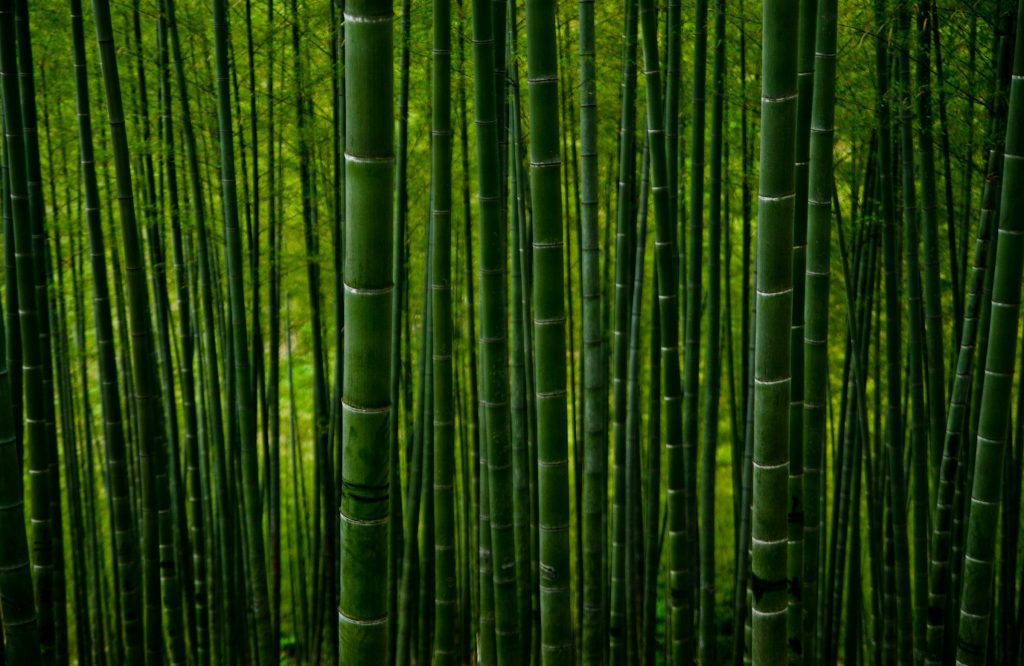
Bamboo is a woody grass — a member of the Poaceae family, the same family that gives us rice, wheat, sugarcane, and the grasses that form the basis of the world’s grazing pastures. This distinction is fundamental to understanding bamboo’s commercial and environmental advantages.
Unlike timber, bamboo is harvested selectively from a permanent root system. Mature culms (stems) are taken each season while the plant continues to grow, produce new culms, sequester carbon, and stabilise soil. There is no clear-felling, no replanting, and no loss of root structure. A single planting produces annual harvests for decades. The plant regenerates stronger after each harvest, producing larger and more numerous culms as the root mass matures.
Growth & Harvest
Bamboo is the fastest-growing plant on earth. A single bamboo culm can grow up to 20 metres in its first year. Bamboo reaches structural maturity and is ready for harvest within 4–7 years, compared to 25–35 years for commercial timber species.
Harvesting is annual, selective, and non-destructive. Mature culms are removed while younger culms continue to grow. The root system remains intact, retaining carbon in the soil and ensuring the plant’s continuous regeneration. This perpetual harvest cycle is fundamental to bamboo’s economic and environmental case — it means ongoing annual employment, ongoing annual production, and ongoing annual carbon sequestration from a single planting investment.

Land Restoration
Bamboo actively restores the land it grows on. Its extensive root system prevents erosion, improves soil structure, increases water retention, and draws toxins from contaminated land and water through a natural process called phytoremediation. As water passes through the bamboo root zone, the roots act as a filter, drawing out pollutants and impurities.
This makes bamboo an ideal crop for rehabilitating degraded agricultural land, disused mine sites, contaminated water catchments, and land affected by salinity or erosion. ABP’s plantation designs incorporate native vegetation corridors to promote biodiversity, including habitat for endangered species such as the Southern Black-throated Finch and Mahogany Glider.
Zero Waste
Every part of the harvested bamboo plant is utilised. High-grade culms are directed to engineered construction products. Offcuts, fibre, and lower-grade material are used for biofuel production — providing feedstock for green methanol, sustainable aviation fuel, and other renewable energy applications. Residual material is converted to biochar, a carbon-rich soil amendment that improves soil structure, water retention, and nutrient availability while storing carbon for hundreds of years. There is no waste stream.


Water Efficiency
Most of the water used in growing bamboo occurs during the establishment and growth phase in the first 5–7 years, which may require irrigation depending on location and species. However, once mature, an established bamboo plantation can retain up to 1,000 tonnes of water per hectare. In the Townsville region, where ABP’s primary operations are planned, the average annual rainfall of approximately 1,112mm provides sufficient water for ongoing plantation operations without supplementary irrigation.
Source: Australian Bureau of Meteorology, Climate Statistics for Local Regions.